The Macdonalds: A Legacy of Resilience and Migration
The Macdonald surname carries a rich tapestry of history, migration, and resilience. For the descendants of Norman and Mary Macdonald in Fiji, understanding this legacy offers a profound connection to their ancestral roots.
Origins of the Macdonald Clan
 The Macdonalds, or Clan Donald, trace their lineage to the western Highlands and Islands of Scotland. Their progenitor, Somerled, a 12th-century warlord of both Norse and Celtic descent, established a dynasty that would wield significant influence over these regions. His descendants became known as the Lords of the Isles, commanding vast territories along Scotland's western seaboard.
There is a rich history of stories and myths that surround the Macdonald Clan.
The Scottish Clan System
In medieval Scotland, the clan system was foundational to societal structure. Clans were extended networks of families united under a common chief, often claiming descent from a shared ancestor. This system fostered a sense of identity, mutual loyalty, and territorial belonging. The Macdonalds, as one of the most powerful clans, exemplified this structure, with their chiefs wielding authority comparable to that of the Scottish kings.
Scottish Migration to Jamaica
Economic hardships, political upheavals, and opportunities abroad prompted many Scots to emigrate during the 17th and 18th centuries. Jamaica emerged as a significant destination, with Scots arriving as indentured servants, merchants, and planters. By the 18th century, thousands of Scots had settled in Jamaica, contributing to its colonial development.
The Macdonalds of Resolis
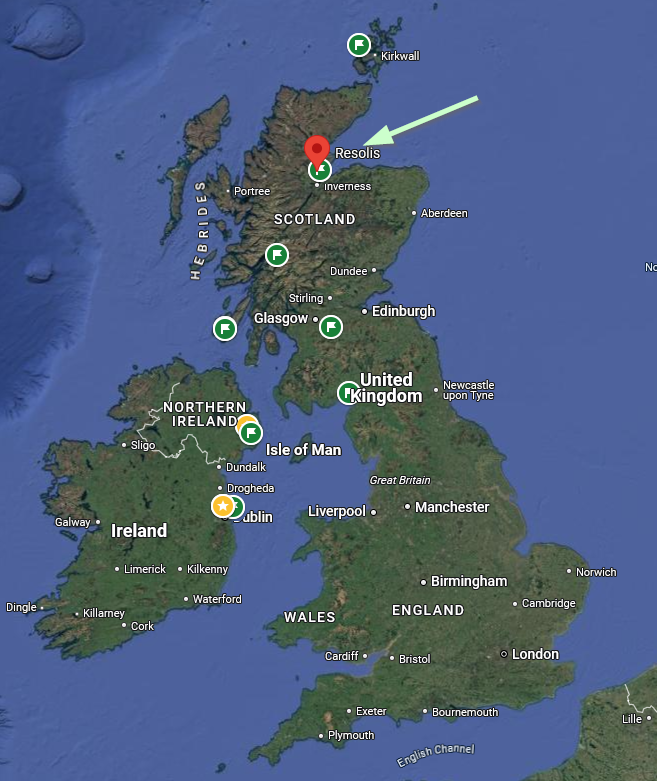 Hugh Macdonald was born in Resolis in 1781. He worked as a gardener on estates in the area, including Braelangwell, Agneshill and Poyntzfield. Gardens
on estate houses were a status symbol and a source of pride for the estate owner. The head gardener was a skilled and respected position, responsible for the design,
maintenance and productivity of the gardens. The head gardener would have been responsible for the cultivation of fruit, vegetables, herbs and flowers, as well as the
management of greenhouses and the supervision of other gardeners and labourers.
Hugh Macdonald was born in Resolis in 1781. He worked as a gardener on estates in the area, including Braelangwell, Agneshill and Poyntzfield. Gardens
on estate houses were a status symbol and a source of pride for the estate owner. The head gardener was a skilled and respected position, responsible for the design,
maintenance and productivity of the gardens. The head gardener would have been responsible for the cultivation of fruit, vegetables, herbs and flowers, as well as the
management of greenhouses and the supervision of other gardeners and labourers.
An article in the Press and Journal in April 1900 noted that he was honoured after his death with an honourary degree of Doctor of Divinity, stating "The older inhabitants of Resolis who remember Dr Macdonald’s father, not only as a skilful horticulturist, but latterly as the genial farmer of Woodside, on the Newhall estate, will be gratified to learn of the honour conferred on the minister of Strachur. Mrs Ross, Newmills Farm, Resolis, is the last local survivor of this well-known family." This degree was typically awarded to recognise a person's significan contributions to the church or community and indicates the respect and esteem in which he was held.
Hugh married Christina Ferguson, and together they had at least 4 children. Hugh passed away in 1860, and Christina in 1864.
The Journey to Jamaica
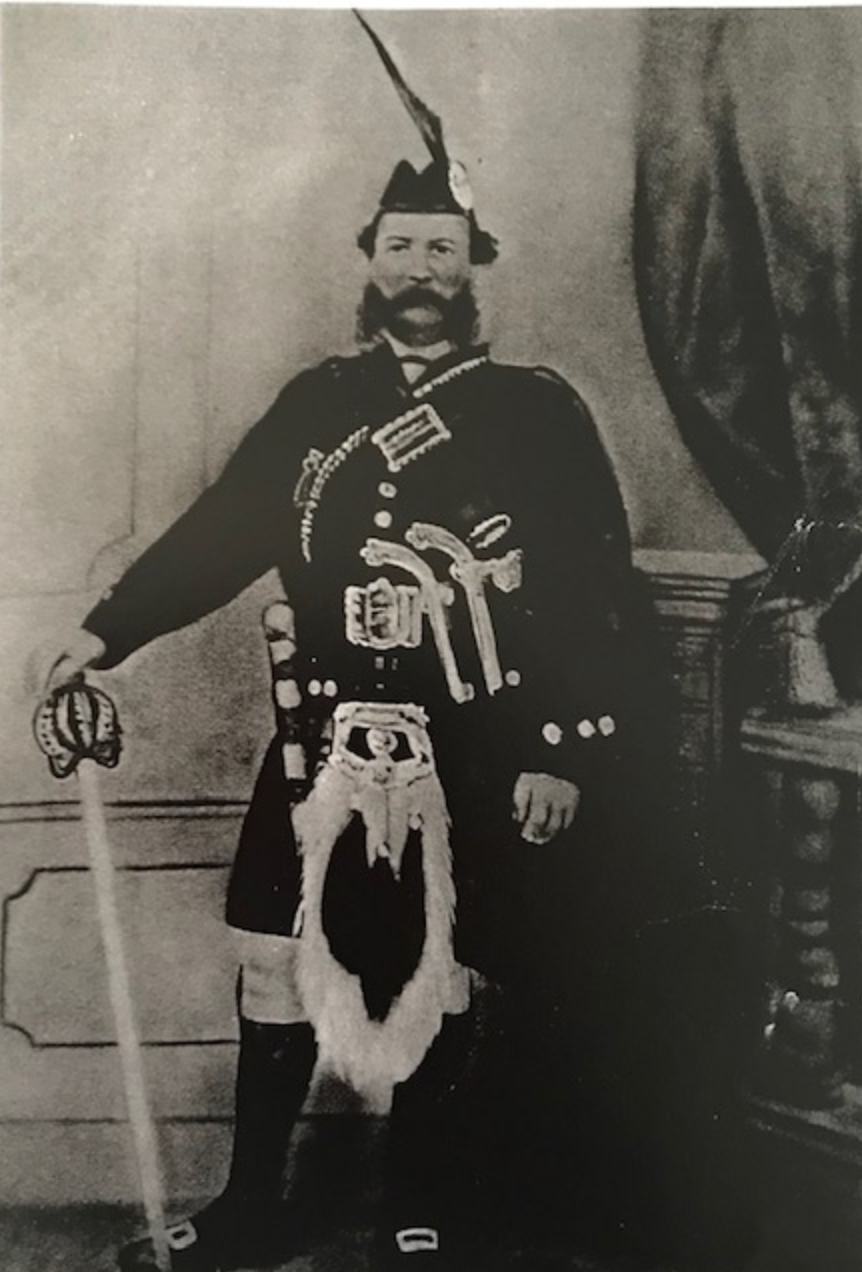
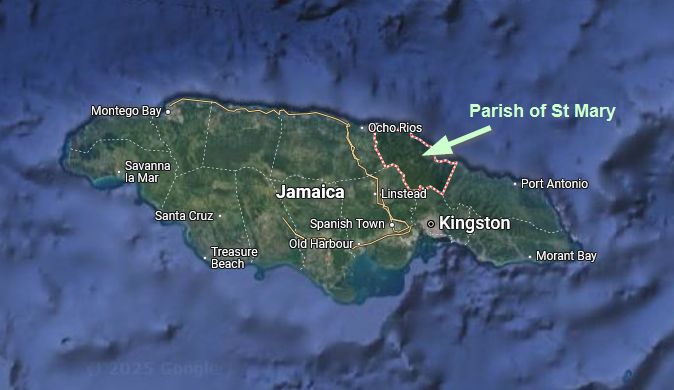 William Hugh Macdonald was born in 1816 in Resolis, Cromartyshire, Scotland. He was the eldest son of Hugh
Macdonald, a farmer at Woodside and former head gardener at Poyntzfield.
William Hugh Macdonald was born in 1816 in Resolis, Cromartyshire, Scotland. He was the eldest son of Hugh
Macdonald, a farmer at Woodside and former head gardener at Poyntzfield.
Although we do not know the exact reasons, William ventured from Scotland to Jamaica. Scotland played a disproportionately large role in British colonisation and imperial expnasion; Scots were overrepresented in all forms of colonial administration, trade and military service. By the 18th century, Scots were among the most numerous and influential groups in the British Empire. By moving to Jamaica, William would have given himself greater opportunities to achieve status, financial security and influence well beyond what he could have achieved in Scotland.
In Jamaica William became a prominent planter acquiring an estate called "Water Valley" in the parish of St. Mary. In 1871 the Kingston Daily Gleaner announced "His Excellency the Governor has been pleased to appoint the Honorable William Macdonald to be Keeper of the Rolls and Records of the Peace for the Parish of St. Mary, and the following gentlemen are associated with him in the Commission of the Peace for the said Parish, viz:– … His Excellency the Governor has also been pleased to appoint the Honorable William Macdonald to be Chairman of the Municipal Board, and the Board of Parochial Road Commissioners for the Parish of St. Mary."
 Among his public advocacy, William encouraged education for the children of the parish, with the Daily Gleaner reporting in 1883 "Educational Meeting at Port Maria. … After devotional exercises, conducted by the
Rev. W.D. Henderson (Baptist) upon his nomination the Hon. William Macdonald, Custos of the Parish, was called to the chair. The Custos addressed the audience at some length,
entering into the question of the desirability of giving all children a good education, showing that education and labour should go hand in hand, and not be severed;
that education and civilization are inseparably connected, and that if we are to form a civilized people in Jamaica, we must be an educated people. He urged upon
parents, with much emphasis, the duty of educating their children."
Among his public advocacy, William encouraged education for the children of the parish, with the Daily Gleaner reporting in 1883 "Educational Meeting at Port Maria. … After devotional exercises, conducted by the
Rev. W.D. Henderson (Baptist) upon his nomination the Hon. William Macdonald, Custos of the Parish, was called to the chair. The Custos addressed the audience at some length,
entering into the question of the desirability of giving all children a good education, showing that education and labour should go hand in hand, and not be severed;
that education and civilization are inseparably connected, and that if we are to form a civilized people in Jamaica, we must be an educated people. He urged upon
parents, with much emphasis, the duty of educating their children."
In Jamaica, William married Anna Cocking, and together they had 9 children.
Norman Macdonald's Voyage to Fiji via India
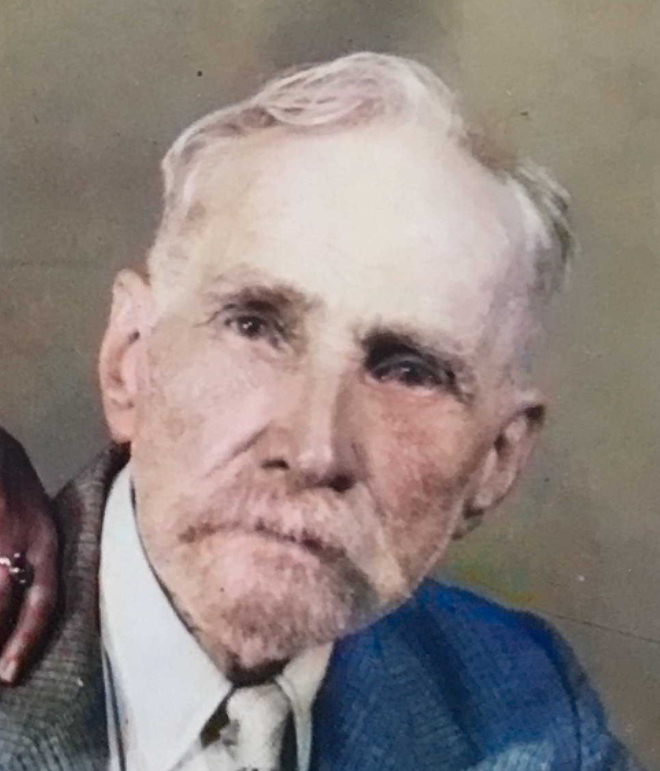 William and Anna's sixth son, Norman Hudson Macdonald, continued the family's legacy of exploration.
Norman Hudson Macdonald was born on November 8, 1866, in Jamaica. In 1883, at the age of only 17, maybe in search of fortune or adventure, Norman boarded a ship and travelled to India. At this time, India was known as the "Jewel in the Crown" of the British Empire, and many Scotsmen sought opportunities in the subcontinent. Norman's journey to India was likely a significant undertaking, involving months at sea and the prospect of establishing a new life in a foreign land.
Around this time, Fiji was experiencing a labour shortage, and the British colonial authorities sought to recruit Indian labourers to work on the sugar plantations. Fiji's plantation economy was expanding rapidly, and the demand for labour was high. Norman may have seized this opportunity to travel to Fiji, where he could find employment. He arrived in Fiji aboard the barque Newhem on July 21, 1884.
Life in Fiji
Norman had two children - Agnes and Alexander - in 1887 and 1888 respectively, with an Indian woman named Bunnee. It is unclear whether he met Bunnee in India, on the boat, or whether he met her in Fiji after arrival. Bunnee was born in Agra, India around 1869.
After arriving in Fiji, Norman worked in Koronivia, and then in Ba at the New Zealand Sugar Company. He worked with the police between 1888 and 1892 during which time he met and married Mary Boehm - Soli and Leonard's daughter. Their union established the Macdonald lineage in Fiji, producing 10 (possibly 11) children.
Those children were William (1889), Flora (1892), Maude (1893), Ronald (1894), Olive (1896), Annie (1898), Norman (1898), Neil (1900), Hector (1902), Lena (1903) and possibly Caroline (1905).
Birth certificates obtained by Clelia Park also indicate a son - James Danford - born in September 1909 to Arieta Danford in Raiwaqa, Suva.
After leaving the police force, he worked as a farmer in Nakadi and Tole. Later in his life he took up Dairy farming with his son Neil Macdonald, purchasing land in Wainibuka. He remained in Wainibuka until Mary's death in 1941, after which he moved to Suva where he passed away after a bout of pneumonia on July 24, 1946.